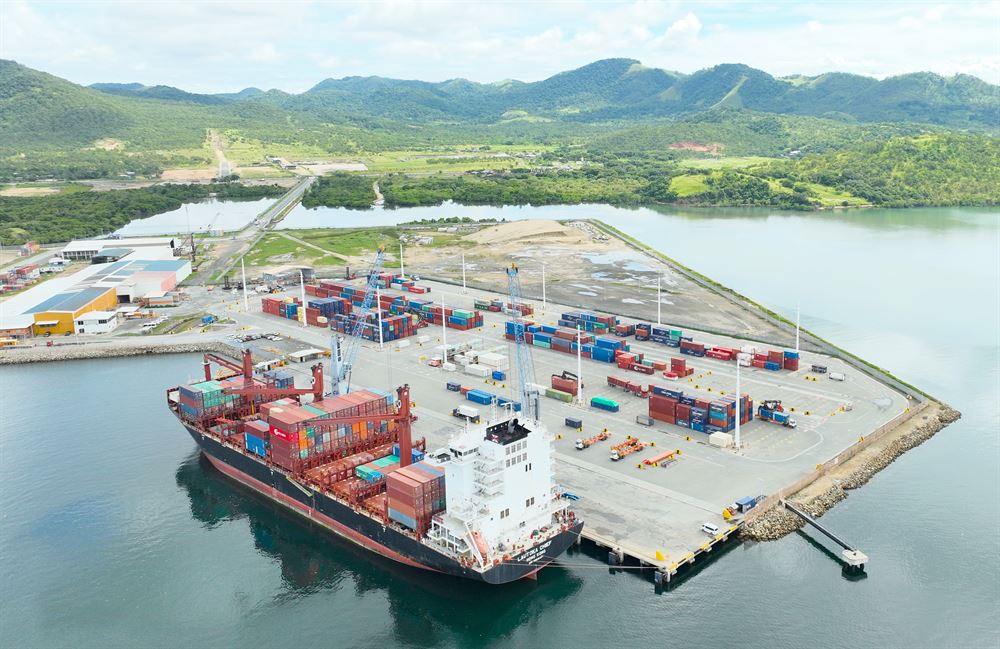
With a decade-long program of port upgrades taking place across the country, a landmark assessment has shed new light on the vital role played by Papua New Guinea’s ports. The findings, released in a socio-economic and financial assessment commissioned by PNG Ports Corporation Ltd (PNGPCL) and funded by the Australian Government, reveal a striking truth: While only three of the nation’s 15 state-managed ports operate profitably, the entire network contributes close to K29 billion annually to the economy.
This contribution—around 22 % of Papua New Guinea’s Gross Domestic Product (GDP), the total monetary value of all goods and services produced in the country—shows that the value of PNG’s ports goes far beyond revenue. It highlights their broader socio-economic role. They are not just gateways for cargo. They are arteries of commerce, enablers of livelihoods, and lifelines for communities. Just as importantly, ports are the backbone of connectivity, linking people and businesses within Papua New Guinea to each other and to the rest of the world.
Financial Findings: Profits Concentrated, Losses Widespread
The financial assessment highlights a dual reality. Between 2020 and 2024, PNG Ports delivered strong consolidated results, with earnings before interest, tax, depreciation and amortisation (EBITDA) averaging nearly 60%. On the surface, this suggests a healthy and sustainable operation.
But the reality is more complex. Port Moresby (Motukea) and Lae alone account for more than 80% of PNG Ports’ revenue and around 86% of its profits. Lae, in particular, contributes nearly half of all revenue. Together, with the marginally profitable port of Kimbe, these two ports effectively subsidise the other 12 ports. The financially loss-making ports are known as Community Service Obligation (CSO) ports.
Without intervention, CSO ports risk falling into decline, with degraded infrastructure, unreliable services, and reduced capacity. For many regional ports the outlook is particularly concerning.
And yet, the study makes one point abundantly clear: while most ports do not cover their costs, they are economically and socially indispensable.
Socio-Economic Findings: Value Beyond the Balance Sheet
The socio-economic assessment, prepared using a model endorsed by the Asian Development Bank, quantifies the broader impact of ports across supply chains. The results are dramatic.
Collectively, PNG Ports’ 15 ports support K28.9 billion in annual economic activity, or 22% of GDP. In 2024 the network handled 9.8 million tonnes of cargo and recorded 3,224 vessel calls, encompassing containerised goods, breakbulk cargo, palm oil, and fuel. But their importance goes well beyond throughput figures.
Ports enable both imports and exports that sustain industries, households, and government revenue. In 2023, PNG imported K19.8 billion worth of goods, including staples such as K592 million of rice, as well as petroleum, machinery, and mining equipment. On the export side, commodities such as petroleum gas, gold, copper, palm oil, cocoa, and coffee provide incomes for communities and foreign exchange earnings for the nation.
Without ports, these trade flows – and the livelihoods they sustain – would simply collapse. Given PNG’s mountainous terrain, fragmented road network, and the prohibitive cost of air freight, there are no substitutes. For most provinces, the local CSO port is the only gateway in or out. In this way, connectivity is not just about moving cargo – it is about linking communities, opening markets, and keeping Papua New Guinea connected to the wider world
The Four Benefits of PNG’s Ports
The assessment identifies four types of benefits delivered by all of the 15 ports in PNG Ports’ network – including the 12 CSO ports. Together, these benefits show why every port matters – not just the profit-making giants of Lae and Port Moresby, and to a lesser extent Kimbe.
(i) Regional Benefits
All ports service a chain of economic activity in their locality, which includes at least one province. For example, Lae Port directly enables agricultural exports from Morobe Province. However, certain supplies for these farms and plantations may need to come from elsewhere. These inputs can potentially be drawn from the neighbouring province of Eastern Highlands which is connected by road, resulting in a ripple effect of economic activity beyond the Morobe Province itself.
(ii) Port Linkage Benefits
Major gateway ports like Lae and Port Moresby provide essential linkages for smaller ports. Vanimo Port in West Sepik, for instance, supports the province’s forestry sector. But Vanimo relies on Lae to import heavy machinery and export timber. If Lae were disrupted, the entire forestry value chain in West Sepik would be compromised.
This interdependence highlights the importance of maintaining both large and small ports. Each is part of a network that sustains regional economies.
(iii) Employment Benefits
Directly and indirectly, ports create and sustain tens of thousands of jobs. Port operations require dockworkers, stevedores, marine pilots, truck drivers, administrators, warehouse workers and more. More broadly, ports underpin employment across the economy by enabling key industries—especially mining and agriculture (two of the nation’s biggest employers) – to move goods through their logistics infrastructure.
Kimbe port in West New Britain is an example of a port which underpins employment in the agricultural sector. The main employer in West New Britain is the oil palm industry. Without Kimbe port, the supply chain would falter, jeopardising the jobs and livelihoods of thousands of smallholder farmers and others along the chain.
(iv) Whole-of-Economy Benefits
The economic activity and employment opportunities generated by ports can also benefit marginalised women and people living with disabilities. As such, ports support government goals for Gender Equality, Disability and Social Inclusion (GEDSI) by connecting remote populations to opportunities. Moreover, ports ensure the steady supply of essentials like rice, fuel, medicines, and construction materials.
In remote islands such as Manus and Bougainville, ports are not just trade hubs – they are community lifelines. They deliver food security, reduce isolation, and underpin development.
Why Community Service Obligation (CSO) Ports Matter
The report makes clear that the importance of ports cannot be measured solely by profit. The 12 smaller, loss-making CSO ports are vital to the communities they serve.
Without Lorengau, the people of Manus would struggle to access affordable goods. Without Daru, communities in Western Province would lose their link to the rest of PNG. Without Wewak, the cocoa industry in East Sepik would be isolated.
Shutting down or neglecting these ports would have devastating consequences:
· Rising consumer prices, as goods are shipped via longer, costlier routes.
· Lost competitiveness for local producers.
· Increased inequality, as remote communities are cut off from opportunity.
The message is simple: Every port is important!
Financial vs. Socio-Economic Significance
The report carefully balances financial and socio-economic perspectives. On paper, only Lae, Port Moresby, and Kimbe generate sufficient cash to cover their costs. But in practice, the socio-economic contribution of the other ports far outweighs their financial deficits.
For example, the combined socio-economic value of the ports is nearly K29 billion annually, dwarfing projected capital and operating shortfalls. A single container of agricultural produce generates far more value for the economy than the port charges it attracts.
The report gives the example of cocoa exports. A single container of cocoa shipped through Lae is valued at K25,000–30,000, while port charges amount to only K1,100. That difference reflects the broader economic value – the incomes of farmers, the businesses that supplied fertiliser, and the logistics firms that handled the cargo.
This makes a strong case for continued government and donor support. Ports are critical infrastructure not just for trade, but for national development, equity, and inclusion.
Investing in the Future: The Port Upgrade Program
Recognising these challenges, PNG Ports is already in the midst of the largest infrastructure upgrade program in its history.
With the support of the Australian Government via its Australian Infrastructure Financing Facility for the Pacific (AIFFP), upgrades are underway at Kimbe, Lae, Daru, Kavieng, and Oro Bay.
In Kimbe, where construction officially began in August, a new wharf and modern facilities are scheduled for completion by the end of 2026. Meanwhile in Lae, plans are advancing to extend the international terminal wharf. This development will transform the nation’s busiest port into a regional transhipment hub and will be complemented by the 400-hectare Lae Industrial Park, for which PNG Ports has lodged an SEZ application.
Other projects are also advancing. Rabaul Port, an increasingly popular cruise tourism destination, is being modernised with funding from the European Union (EU), the Agence Française de Développement (AFD), and the European Investment Bank (EIB).
Construction is expected to commence at Daru, Kavieng, and Oro Bay, by mid to late next year. Furthermore, smaller but critical works funded in-house through PNG Ports are in the pipeline for Lorengau, Madang (Kinim Wharf), Vanimo, and Wewak. These works are scheduled to commence either late in 2025 or early in 2026.
The Port Upgrade Program is not only about infrastructure; it is about building resilient connectivity for the next 50 years. By modernising wharves, strengthening supply chains, and expanding capacity, PNG Ports is ensuring that the nation’s ports remain the lifelines of communities and engines of development well into the future.
The Human Dimension
Beyond statistics, the ports shape daily life. They deliver food to markets, fuel for vehicles, medicines for hospitals, and building materials for homes. They sustain industries from mining to fisheries, and they keep families connected across PNG’s islands and highlands.
They also create opportunities for women and people with disabilities, especially in rural areas. By ensuring the flow of goods and supporting industries, ports advance gender equality and reduce disadvantage.
Challenges Ahead
The path forward is not without challenges. The report highlights several key risks:
Funding shortfalls: With a projected K13.4 billion gap over the next decade, sustaining port infrastructure will require significant new investment.
Asset condition: Many ports require urgent renewal and maintenance to remain operational.
Over-reliance on Lae and Port Moresby: The financial health of the entire network essentially rests on two ports.
Given these challenges, PNG Ports is commissioning a second study to explore funding options. The aim is to ensure sustainability across the entire network well beyond PNG’s 100 years of independence in 2075.
A Golden Jubilee Reminder
The findings come at a symbolic moment, with PNG having just celebrated its Golden Jubilee. The report is a reminder that ports are not just infrastructure – they are symbols of sovereignty, engines of growth, and lifelines for communities.
From the coffee grower in Goroka to the fisher in Wewak, from the miner in Morobe to the family in Manus waiting for rice deliveries, every Papua New Guinean has a stake in the ports.
As PNG enters its next 50 years, ensuring the resilience of its ports – and the connectivity they provide – may be one of the most important investments the nation can make.